Have you ever wondered how websites work? How do they show pictures, text, buttons, and forms when you visit them? And how do they store all the information, like your login details or messages, safely behind the scenes? Websites are built using two main parts: the front-end and the back-end.
In this blog, we will explore front-end development, back-end development, and how they work together. We will also explain how WordPress fits into this world. WordPress is a popular platform that makes website building easier for people who are not professional developers. By the end, you will have a clear understanding of these two essential areas of web development.
What is Front-End Development?
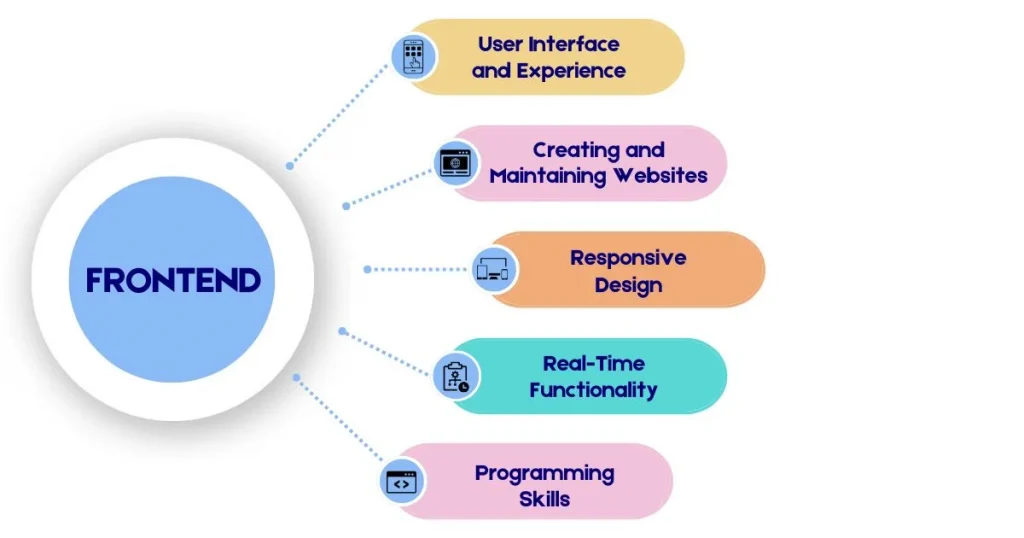
The front end is what people see and use on a website. It includes everything that appears on your screen when you visit a website: text, images, buttons, menus, and forms. This part of a website is also called the client side because it happens on the user’s device. Front-End vs. Back-End Development involves designing how a website looks and ensuring that it works smoothly for users.
Main Components of Front-End Development
HTML (Hypertext Markup Language):
HTML is the basic structure of any web page. It tells the browser what elements to display (such as headings, paragraphs, images, and links).
Think of HTML as the basic structure of a website. It gives a website structure and organises its content.
CSS (Cascading Style Sheets):
CSS is used to style a website. It adds colours, fonts, and layouts to the content created with HTML.
If HTML is the basic structure, then CSS is the outer look and style. It makes the website look pretty.
JavaScript:
JavaScript makes a website interactive. It allows you to do things like click buttons, fill out forms, and watch videos. It also helps change content dynamically without refreshing the entire page.
JavaScript is like the muscles of a website, enabling it to perform actions and react to user input.
Front-End Developer Responsibilities:
Example of Front-End Development
Imagine you visit an online store. The front-end of the store is everything you see: the images of the products, the search bar, the shopping cart button, and the form you fill out to check out. All of these elements are created using HTML, styled with CSS, and made interactive with JavaScript.
What is Back-End Development?
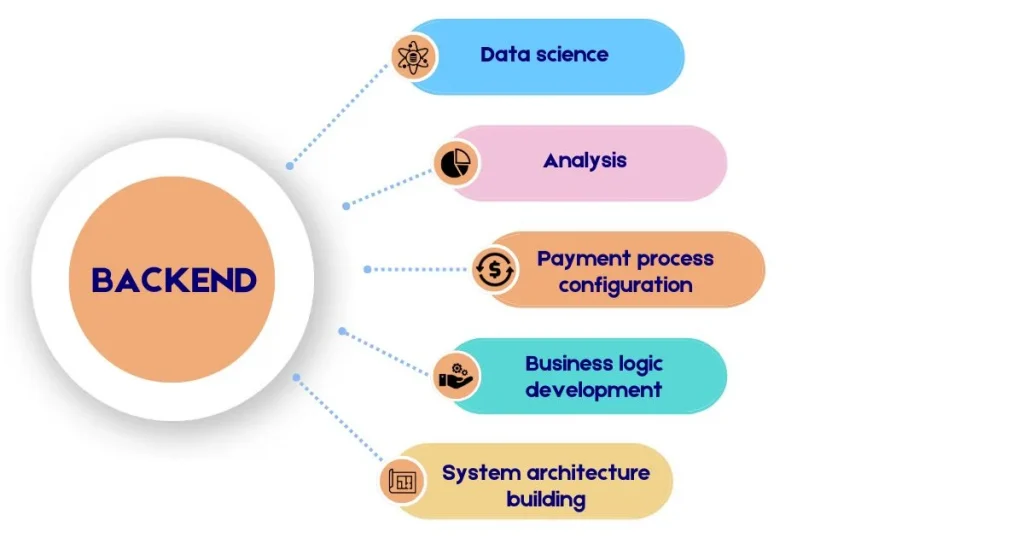
While the front-end is what you see, the back-end is what you don’t see. The back end works behind the scenes to run the website. It stores data, processes user actions, and ensures everything runs smoothly. This part of a website is often called the server-side because it involves tasks performed on the web server (a powerful computer that hosts the website).
Back-end development involves writing code that connects the website to databases, handles business logic, and processes user requests.
Main Components of Back-End Development
Servers:
A server is a computer that holds the website’s files and information. When you enter a URL into your browser, the server sends the correct web page to your device.
It handles requests from users and sends back the appropriate response, such as a web page or a piece of data.
Databases:
A database stores all the information a website needs, such as user accounts, product lists, or blog posts.
When you log into a website or submit a form, the back-end checks the database to verify your details.
Programming Languages:
The back-end uses programming languages like PHP, Python, Ruby, or Java to perform tasks such as storing data or processing requests.
These languages help the server connect with the database and the front end.
APIs (Application Programming Interfaces):
APIs act as messengers between the front-end and the back-end. They allow the front-end to request information from the back-end and display it on the website.
APIs make it possible for a user’s action on the front-end (like filling out a form) to be processed and stored on the back-end.
Backend Developer Responsibilities:
Example of Back-End Development
Imagine you log into your favourite social media platform. When you enter your username and password, the back-end checks the database to see if your login details are correct. If they are, the back-end sends a signal to the front-end, allowing you to access your account. This is another example of the Front-End vs. Back-End Development relationship.
How Front-End and Back-End Work Together
Now that you know what front-end and back-end development are, let’s see how they work together.
You visit a website (Front-End): The front-end sends a request to the back-end, asking for data like images, text, and user information.
The back-end processes the request: It checks the server and database to retrieve the requested data, such as your account details.
The back-end sends data to the front-end: The back-end sends the requested data back to the front-end.
The front-end displays the data: The front-end uses the data to update the webpage and show it to the user.
The front-end and back-end need to communicate well to create a smooth experience for users. If either part fails, the website won’t work properly. This integration is crucial in understanding Front-End vs. Back-End Development.
WordPress: Combining Front-End and Back-End Development
WordPress is one of the most popular tools for building websites worldwide.It’s a content management system (CMS) that simplifies the process of building and managing websites without needing advanced coding skills. WordPress is used by millions of people, from small business owners to large companies, to create websites.
How WordPress Works
WordPress has both front-end and back-end components:
Front-End in WordPress: This is what users see when they visit a WordPress website. WordPress themes control the design of the front-end. Themes use HTML, CSS, and JavaScript to make the website look beautiful and functional.
Back-End in WordPress: This is where the website owner or administrator manages the site. The back-end in WordPress is called the dashboard. It allows you to create and manage posts, pages, user accounts, and more. You don’t need to be an expert developer to use the back-end because WordPress provides an easy-to-use interface.
Why Use WordPress?
Ease of Use: You don’t need to know how to code to build a website on WordPress. Its dashboard makes it easy to add new content, change the design, and manage your site.
Customisation: You can choose from thousands of themes and plugins to customise your website’s look and functionality.
Content Management: WordPress is perfect for managing content, such as blog posts, images, and videos.
SEO Friendly: WordPress has many built-in tools and plugins that help optimise your website for search engines.
Open Source: WordPress is open-source, which means it’s free to use and continuously improved by a global community of developers.
Front-End vs. Back-End Development: Key Differences
1. Visible vs. Invisible
Front-End: This is the part of the website that people see and use.
Back-End: This is the part that works behind the scenes, managing the website’s data and functionality.
2. Tools and Languages
Front-End: Uses tools like HTML, CSS, JavaScript, and front-end frameworks like React and Angular.
Back-End: It uses coding languages like PHP, Python, Ruby, and Java. It also involves managing servers and databases using tools like MySQL or MongoDB.
3. Focus on User Interaction vs. Functionality
Front-End: Focuses on creating an enjoyable and easy-to-use interface for the user.
Back-End: Focuses on ensuring the website functions properly, processes requests, and manages data securely.
4. Client-Side vs. Server-Side
Front-End: Works on the client side, meaning everything is processed on the user’s device (like a phone or computer).
Back-End: Works on the server side, meaning everything is processed on the website’s server.
Full-Stack Development: The Best of Both Worlds
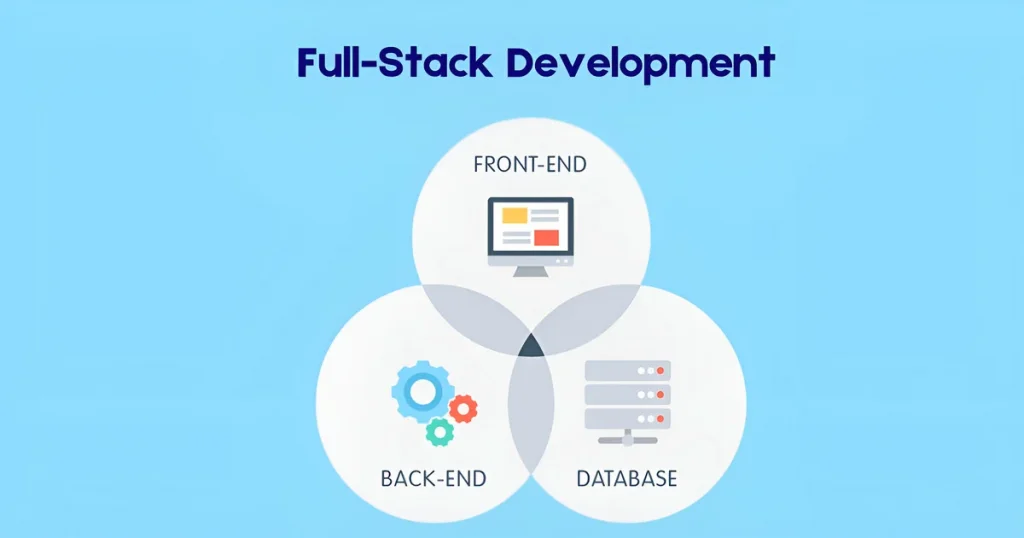
Some developers are good at both front-end and back-end work. These developers are called full-stack developers. They can build both the visible part of the website and the invisible parts that make it work.
Why Full-Stack Development is Important
Versatility: Full-stack developers understand how both front-end and back-end work, allowing them to build a website from start to finish.
Better Communication: Full-stack developers can communicate with both front-end and back-end teams, making the development process smoother.
Problem-Solving: Since full-stack developers know both sides of development, they can troubleshoot and solve problems more effectively.
How to Become a Front-End, Back-End, or Full-Stack Developer
If you want to learn web development, here are some steps you can follow:
For Front-End Development:
Learn HTML, CSS, and JavaScript: These are the basic tools for front-end development.
Practice with Front-End Frameworks: Learn frameworks like React, Vue.js, or Angular to create more advanced websites.
Master Responsive Design: Ensure websites look good on all devices (phones, tablets, and desktops).
For Back-End Development:
Learn Programming Languages: Start with PHP, Python, or Node.js.
Understand Databases: Learn how to work with databases like MySQL or MongoDB.
Study APIs and Servers: Learn how to build and use APIs, and understand how servers work.
For Full-Stack Development:
Master Both Front-End and Back-End: Start by learning front-end and back-end technologies.
Work on Full-Stack Projects: Build projects that involve both the front-end and back-end to gain experience.
Conclusion
In short, knowing the difference between Front-End vs. Back-End Development is important for anyone interested in making websites. Both parts are key to building sites that work well and look good. Front-end developers care about what users see and use, while back-end developers handle the server side to keep everything working smoothly.
If you want to create a website, WordPress is a great choice because it makes the process easier by bringing together both front-end and back-end features. Whether you want to focus on front-end, back-end, or be a full-stack developer, understanding how these parts work together will help you build better websites.
Now that you understand Front-End vs. Back-End Development, which path will you take?
Is your website not getting many visitors? You’re not alone! Many sites struggle with this. But don’t worry, you can still make your website better. Conversion Rate Optimisation, or CRO, helps you make sure visitors do what you want them to, like signing up for a newsletter, buying something, or filling out a form.
CRO focuses on making the visit better for people, so they are more likely to do these things. Even with few visitors, you can use different ways to improve your website and get good results. Let’s look at some top tips to help your website succeed, even with low traffic!
What is the Conversion Rate?
Website traffic is very important for online businesses. More visitors can mean more customers and more money. Traffic also helps try new ideas with something called conversion rate optimisation (CRO). CRO means changing a website to get more people to buy things or sign up.
Big companies like eBay and Google have lots of visitors, so they can learn easily what works. Smaller websites don’t have as many visitors. This makes it harder to know what changes help. However small businesses can still improve their websites. They can use special tips and tricks that work even if they don’t have a lot of traffic.
What Constitutes a Good Conversion Rate?
Are you seeing a conversion rate of 3%, 5%, or even 10%? You might wonder if that’s the best you can do. On average, landing pages have a conversion rate of about 2.35%. The best 25% of them get rates of 5.31% or higher. The top 10% do even better, reaching 11.45% or more. Remember, what is considered a “good” conversion rate can change depending on your industry, niche, goals, traffic sources, and who your audience is. By knowing where you stand now, you can make steady improvements that match your business goals.
Some advertisers get conversion rates that are two or three times better than the average! So, do you want to be just average, or do you want your account to stand out and do really well?
We studied landing pages and conversion rates to find out what the best ones do. Guess what? You’re closer to getting better conversion rates than you think! You might just need to try some new and different ideas.
Key Points:
What is Conversion Rate Optimisation? Conversion Rate Optimisation, or CRO, is about making your website better so more people do things you want. This could involve making a purchase or subscribing to a newsletter. Think of it like fixing up a store so more people come in and buy things. It’s about small changes that make a big difference in getting people to take action.
Benefits of Conversion Rate Optimisation: CRO helps your website get more customers without needing extra visitors. By making small changes, you can encourage people to buy or sign up. It’s a smart way to make the most of your site!
How to Calculate Your Conversion Rate
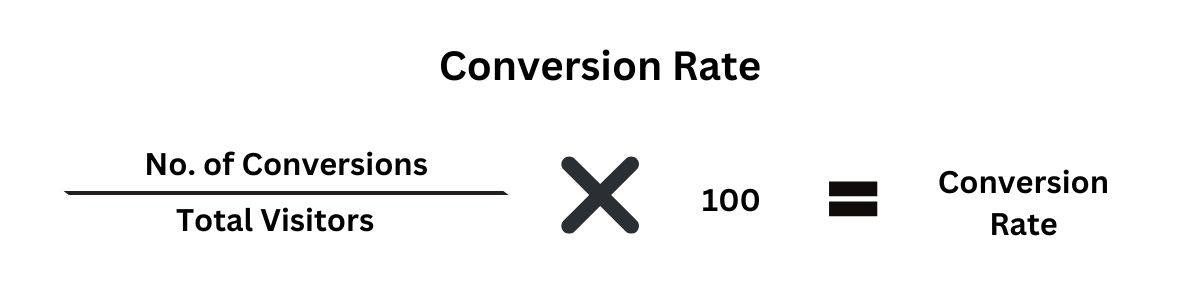
Here’s how you calculate it: divide the number of conversions by the number of visitors, then multiply by 100 to get a percentage. It’s like finding out how many out of 100 visitors do what you want.
To track conversions, you can use special tools that show when people do things you want, like sign up or buy something. These tools let you set up a special event to count as a conversion, such as downloading an e-book. You choose the action, and the tool tracks it for you. It’s like having a helper that tells you when someone did what you hoped for on your website.
Let’s say 300 people downloaded your e-book, and 15,000 people visited your website. To find the conversion rate, you divide 300 by 15,000. This equals 0.02. Then, multiply 0.02 by 100 to get 2%. This means 2 out of every 100 visitors downloaded your e-book.
When calculating conversion rates, only count the visitors who see the pages where they can do what you want, like signing up or making a purchase. This helps you get the right conversion rate for each action you’re tracking. To find the overall conversion rate for your whole site, add up all the conversions and then divide by the total number of people who visited your site. It’s like making sure you’re only counting the right group of people to see how well your site is doing!
Challenges of Optimising Low-Traffic Websites
Testing is really important to make sure your website works well and makes money. To get good results from tests, you need a lot of data. More traffic means more data, but getting more visitors can be hard and expensive for new and small businesses.
Small websites can have a hard time improving their conversion rates because they don’t get as many visitors. This means it takes longer to see if the changes they make to the website are working. If they stop testing too soon, they might think something is working when it really isn’t. This can slow down how fast they can get better. It’s like trying to see how a new game works with only a few friends; you might not know if everyone likes it until more people try it out.
A/B testing is one way to see which website changes are best, but it can be tricky with low traffic. If your website doesn’t get many visitors, you might want to ask a CRO company for help. They can guide you through improving your site, even if not many people visit it. Knowing how CRO can help your website succeed is important for your online success!
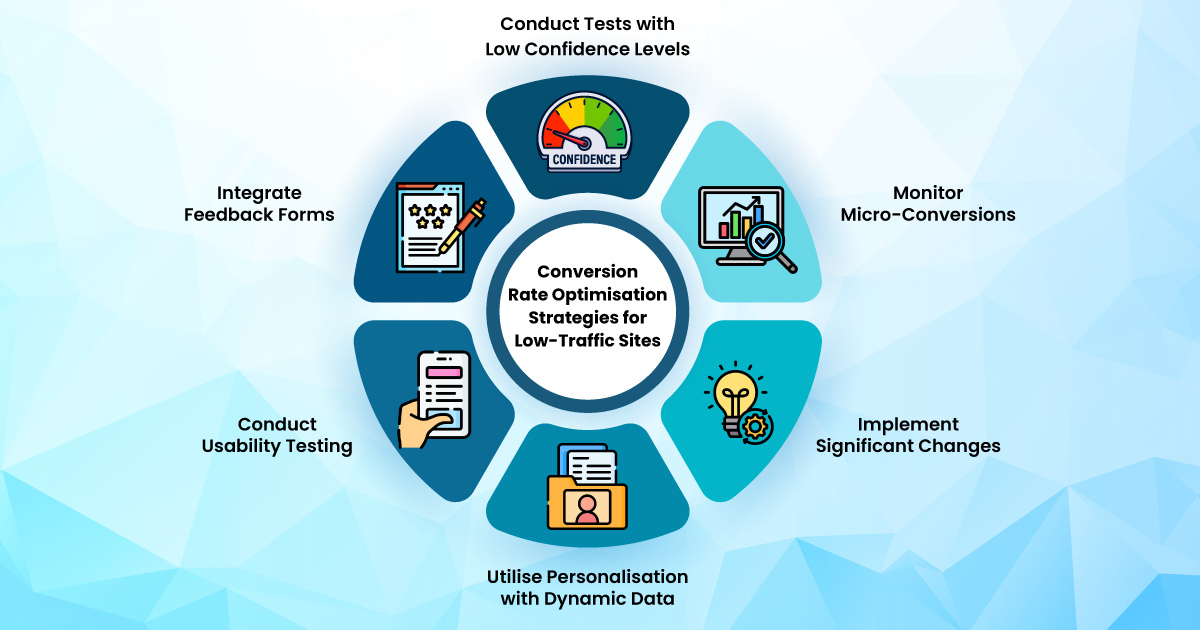
Conversion Rate Optimisation Strategies for Low-Traffic Sites
For websites that don’t get a lot of visitors, it’s really important to turn those visitors into customers. Even if not many people visit, you want to make sure the ones who do take action, like buying something or signing up. To do this, you can use conversion rate optimisation (CRO) strategies. These are ways to make your website work better for you. These are some of the top tips for you:
Conduct Tests with Low Confidence Levels
In statistics, the confidence level tells you how sure you can be about your test results. A higher confidence level means you can trust the results more. For example, if you have a 95% confidence level, it means you’re 95% sure your results are right, with only a 5% chance they might be wrong.
When you test things on your website, like a new design, the confidence level helps you know how much data you need. But if your website doesn’t get many visitors, gathering enough data can be tough. To get results faster, you might use a lower confidence level.
When you test a new website design and you are 85% sure it’s right, you can decide what to do even if not many people visit. It might not be very exact, but it lets you try new ideas quickly without waiting for lots of visitors.
To make your website better, you can get help from a conversion rate optimisation company. They know the best ways to test changes, even if only a few people visit your site.
Monitor Micro-Conversions
Conversion is like a journey with many small steps leading to one big goal. These small steps are called micro-conversions, and the big goal is the macro conversion.
Micro-conversions show that people are interested in what you have. They are important for websites with few visitors because they happen more often. For example, a blog might have more people sign up for a newsletter than buy a book. Tracking these small actions helps you collect more information for testing.
While having more micro-conversions helps you test with fewer visitors, focusing too much on them can be tricky. They might not always lead to more money if they don’t directly help your main goal.
To make sure micro-conversions really help your website, think of them as part of the whole journey users take. Improving these small steps can make visitors happier and help you reach your big goals.
To make your website work better, think about getting help from a conversion rate optimisation company. They can help you track and improve both small and big steps to get better results!
Implement Significant Changes
When you’re testing a website that doesn’t get many visitors, it’s hard to learn much from small changes. But you can still find out what works best!
Instead of changing tiny details, try making big changes. Big changes can show you clearer results about what people like. For example, if you’re testing a new look for your website, changing the whole design might be better than just moving a button.
Imagine your old page gets 5 out of 100 people to do what you want (like sign up or buy something). If you make big changes and the new page gets 45 out of 100, that’s a big jump! This shows the new design is better.
So, making big changes can help you see what works best faster. If you want to make your website better, a conversion rate optimisation company can help. They know how to run tests that can improve your website’s performance!
Utilise Personalisation with Dynamic Data
Personalisation on a website means showing visitors things they like based on what they did before. This helps make more people do what you want, like buying something.
Websites can use information like what you searched for, where you live, or what you clicked on. For example, Spotify suggests songs based on what you listened to before. This is what makes using your site more fun.
Even if not many people visit your site, personalisation can still help. A small bookstore used a tool to suggest books people might like. This made their sales go up by 30%, and people spent 20% more money. To make your custom web application better, you can get help from experts. They know how to change things so your site works well for everyone.
Conduct Usability Testing
User testing is about seeing how well a website works for its visitors. It helps find problems and makes the site better, which is important for getting more people to do things like sign up or buy something.
Even if not many people visit your site, user testing is still useful. You don’t need a lot of people to get important feedback. The goal is to make your website easier to use, which can help increase conversions.
A local animal shelter wanted more online donations, but people couldn’t find the donation button easily. They tested it with users and found out the button was hard to see and confusing. So, they moved it to a better spot and changed the text to “Donate Now.” This small change made donations go up by 300%!
Integrate Feedback Forms
Conversion rate optimisation (CRO) makes your website simple to use. When people find your site fun and easy, they are more likely to do things they want, like buying stuff or signing up for emails.
To make these improvements, it’s important to know what your visitors think about your website. Big companies spend a lot of money to learn about their customers, but you can do it easily with feedback forms. These forms let you ask visitors how they feel about your site and what they need.
For example, an online clothing store added a feedback form that showed up after a minute. They learned that customers found the checkout process confusing. By making it simpler, the store had 25% more people finish buying things.
Where to Focus Your CRO Efforts?
Making your website better is like cleaning your room. Conversion Rate Optimisation (CRO) helps visitors do what they want, like signing up or buying. It’s important to know what to fix so visitors notice the changes. By focusing on key areas, you can make your site easier and more attractive:
Improve Your Homepage
Your homepage is like a friendly door. Since it’s the initial impression for visitors, ensure it’s inviting and friendly! Here’s how to make it better:
Show links to important product info.
Add a big, friendly button to sign up.
Use a chatbot to help with questions.
Tip: Try different titles and pictures to see what grabs visitors’ attention and makes them want to stay.
Make Pricing Clear
The pricing page is important for getting new customers. Here’s how to make it better:
Offer different pricing choices, like monthly or yearly.
Explain what each price includes.
Add a phone number for questions.
Example: One company added a simple email signup on their pricing page and got over 400 new contacts in three weeks!
Tip: Make prices clear and add customer reviews to build trust.
Boost Your Blog
A blog is a great chance to connect with visitors. Besides sharing helpful articles, you can:
Include calls-to-action (CTAs) to guide readers to sign up or learn more.
Tip: Use relevant CTAs within your posts, like inviting readers to download a free guide in exchange for their email.
Make CTAs Stand Out
CTAs are your way to encourage action. Make sure they are:
Easy to find and clearly worded.
Visually distinct with eye-catching colours. Example: A company saw a 36% increase in logins just by changing their button from an icon to text!
Tip: Use action-oriented phrases like “Get Your Free Quote Now” instead of just “Submit.”
Design Great Landing Pages
Landing pages are designed for specific actions, so keep them simple. For instance, if you’re promoting an event, include a video recap to entice visitors.
Tip: Every landing page should focus on a single objective, such as gathering email addresses or making a sale.
Simplify Your Forms
Whether it’s for signing up or contacting you, make forms easy to fill out.
Reduce the number of required fields.
Use clear labels and give feedback as users fill them out.
Tip: Keep forms short! The easier they are to complete, the more likely people are to finish them. Consider breaking long forms into smaller steps.
CRO Calculations
Conversion Rate Optimisation (CRO) is all about making the most of your website visitors. Instead of just wishing for more people to sign up or buy, you should look at how many people come to your site. Then, see how many actually do what you want, like signing up for your emails or buying a product.
Your conversion rate shows how many people visiting your site do what you want, like signing up or buying something. Instead of just counting these people, work on getting more visitors to take these actions. Here are two easy calculations to help you understand and improve your conversion rate:
Calculation 1: Counting Net New Customers
To find out how many new customers you need, divide your revenue goal by the average amount each customer spends. If you want to make $10,000 and your average sale is $100, you need 100 new customers.
Calculation 2: Setting Lead Goals
To set a lead goal, divide the number of new customers you want by your lead-to-customer rate. If you typically turn 20% of leads into customers and you want 100 new customers, you’ll need 500 leads.
Getting Started with Conversion Rate Optimisation (CRO)
If you’re wondering, “What’s the best way to begin with conversion rate optimisation (CRO)?” you can use a framework such as the PIE (Potential, Importance, and Ease) framework as your main foundation. This method helps you figure out which changes to make first by looking at three things: Potential, Importance, and Ease.
Using the PIE Framework
Potential: How much improvement could this change bring?
Importance: How valuable will this improvement be for your users and your goals?
Ease: How easy or hard will it be to implement this change?
For each strategy you consider, give it a score from 1 to 10 (with 1 being the lowest and 10 the highest) for each of these three areas. Once you’ve scored all your ideas, add the scores together. The projects with the highest total scores are the ones you should tackle first.
Other Useful Frameworks
1. ICE Framework Similar to PIE, the ICE framework looks at Impact, Confidence, and Ease.
Impact: What is the expected effect of the change?
Confidence: How certain are you that this change will be effective?
Ease: How easy is it to implement?
Score each area and prioritise your efforts based on the total.
2. RICE Framework RICE stands for Reach, Impact, Confidence, and Effort.
Reach: How many users will this change affect?
Impact: How significant will the improvement be?
Confidence: How certain are you about the results?
Effort: How much work is needed?
In Summary
Even if your website doesn’t have a lot of visitors, you can still improve it with Conversion Rate Optimisation (CRO). Make sure your site is easy to use and has clear instructions like “Buy Now” or “Sign Up.”
Every visitor matters and even small changes can have a big impact. Try different things and check what works best by looking at your data. With some effort and smart ideas, your website can help your business grow. Keep improving, and you’ll see more people doing what you want!
E-commerce has become a significant part of the global economy, and Australia is no exception. Over the last decade, online shopping has transformed the way Australians buy goods and services. As more businesses shift to digital platforms, the competition in e-commerce is growing.
To succeed in this fast-evolving market, businesses must adopt effective digital marketing strategies. In this blog, we will explore the future of e-commerce in Australia and discuss the key digital marketing strategies that can help businesses thrive. From emerging technologies like artificial intelligence to evolving customer expectations, the landscape is changing, and staying ahead requires understanding the trends shaping the industry.
Understanding the E-commerce ecosystem in Australia
The e-commerce ecosystem in Australia is a complex network of businesses, consumers, and technology that supports online shopping. Here are the key components that make up this ecosystem:
Growth of E-Commerce in Australia
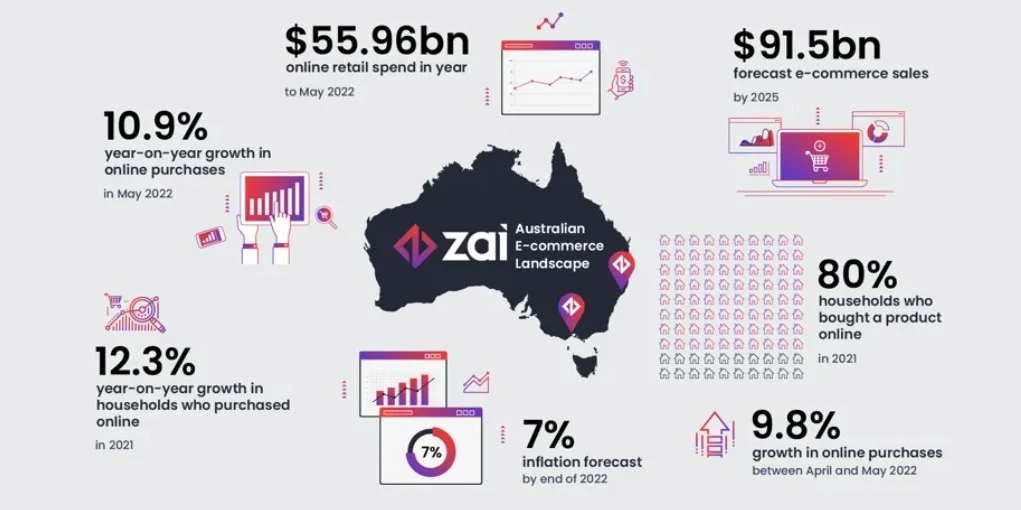
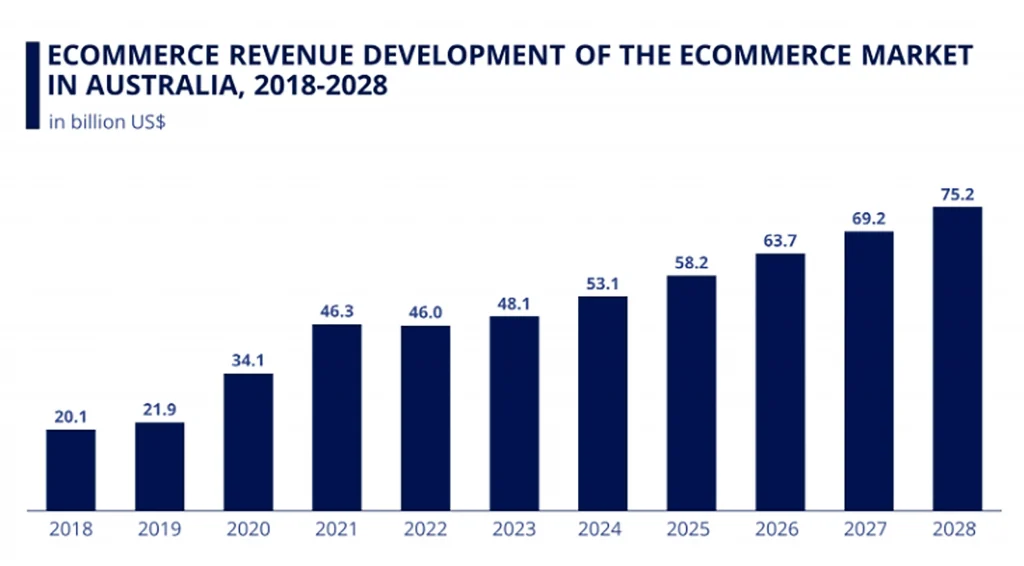
Australia has witnessed significant growth in the e-commerce sector, especially after the COVID-19 pandemic. More people than ever are comfortable shopping online, and the trend is expected to continue growing in the coming years. In 2023, Australia’s e-commerce market generated billions in revenue, and by 2025, it is projected to account for an even larger share of retail sales.
Key industries benefiting from this growth include fashion, electronics, and homeware. Many small businesses have also found success in e-commerce, thanks to the accessibility of digital platforms.
Key Trends Shaping E-Commerce in Australia
Several trends are shaping the future of e-commerce in Australia:
Shift to Mobile Commerce (m-commerce): More Australians are using smartphones and tablets to shop online, making mobile optimisation essential for businesses.
Personalised Shopping Experiences: Consumers expect personalised product recommendations and targeted ads, powered by AI and data analytics.
Sustainable Shopping: Many Australians are prioritising eco-friendly brands that focus on sustainability and ethical practices.
Challenges Facing Australian E-Commerce Businesses
Despite the growing opportunities, there are several challenges businesses face in the Australian e-commerce market:
Logistics and Delivery: Australia’s vast geography can make shipping costly and time-consuming.
Increasing Competition: As more businesses go online, competition is tougher than ever, making it crucial to stand out with unique value propositions.
Changing Consumer Expectations: Today’s consumers expect faster delivery times, seamless user experiences, and excellent customer service.
The e-commerce industry is undergoing a significant transformation, driven by rapid technological advancements and shifting consumer expectations. As we look to the future, several key trends are poised to redefine the way we approach online shopping. From the integration of artificial intelligence to the rise of mobile and social commerce, these developments promise to enhance the consumer experience and present new opportunities for businesses worldwide.
The Rise of Mobile Commerce (M-Commerce)
As mobile device usage continues to increase, mobile commerce is becoming a dominant force in the e-commerce space. Australians are increasingly using their phones to browse, shop, and pay for products, making it essential for businesses to ensure their websites and apps are mobile-friendly. A poor mobile experience can result in lost sales, so optimising websites for speed, simplicity, and functionality on mobile devices is key.
Impact of Artificial Intelligence (AI) and Machine Learning
Artificial intelligence and machine learning are revolutionising e-commerce. AI-driven tools allow businesses to analyse customer data and predict future shopping behaviours, enabling more personalised marketing campaigns. From chatbots providing instant customer service to AI algorithms that recommend products, these technologies are reshaping how businesses interact with customers.
Using Augmented Reality (AR) and Virtual Reality (VR) for Online Shopping
AR and VR technologies are becoming popular in online retail, offering customers an immersive shopping experience. AR allows users to “try on” products such as clothes, accessories, or makeup before purchasing. Similarly, VR can provide virtual tours of products or experiences, like home design or travel destinations. These technologies create engaging and interactive shopping experiences that can drive conversions.
The Shift Toward Sustainable and Ethical Shopping
Shoppers are increasingly aware of how their purchases affect the environment and society. Australian shoppers are no exception, with a growing preference for sustainable, eco-friendly, and ethically produced products. Businesses that align their practices with these values—such as offering eco-friendly packaging or supporting social causes—can build stronger relationships with customers.
Digital Marketing Strategies for Success
In the ever-evolving e-commerce landscape, effective digital marketing strategies are crucial for success. Here, we delve deeper into several key strategies Australian e-commerce businesses can employ to enhance their online presence, attract customers, and boost sales.
1. Search Engine Optimisation (SEO) for E-Commerce
Search Engine Optimisation (SEO) is vital for increasing visibility on search engines like Google. For e-commerce businesses, optimising product pages and the overall website is essential to drive organic traffic.
Keyword Research: Start with thorough keyword research to identify what terms potential customers are using to search for products similar to yours. Tools like Google Keyword Planner and SEMrush can help uncover valuable keywords.
On-Page SEO: Optimise product titles, descriptions, and images using relevant keywords. Ensure that your URLs are clean and descriptive. Use headings (H1, H2) appropriately to structure content and enhance readability.
Technical SEO: In e-commerce SEO, technical factors play a critical role. Ensure your website loads quickly, is mobile-friendly, and has an XML sitemap. Fast-loading pages improve user experience and contribute to better search engine rankings.
Content Marketing: Create informative blog posts related to your products. For instance, if you sell outdoor gear, writing articles about camping tips can attract relevant traffic. Quality content can establish your authority in your niche and improve SEO.
Local SEO: For businesses with a physical presence, optimising for local search is essential. Implementing effective Local SEOstrategies involves registering your business on Google Business Profile, using local keywords, and encouraging customer reviews to enhance your local visibility.
2. Content Marketing and Blogging
Content marketing involves developing and sharing valuable content to capture the attention of and engage a specific target audience. For e-commerce, this means providing content that helps customers make informed purchasing decisions.
Informative Blog Posts: Write blogs that address customer pain points or answer common questions. For instance, if you sell skincare products, posts about skincare routines can guide customers toward purchasing your products.
Video Content: Videos are engaging and can showcase product demonstrations, reviews, or tutorials. Consider creating “how-to” videos that highlight your products in action, as this can significantly influence purchasing decisions.
User-Generated Content: Motivate customers to share their experiences through reviews, photos, or videos. Showcasing this content on your website or social media can foster community and build trust in your brand.
Visual Content: High-quality images and infographics can enhance product listings and blog posts. Use appealing visuals to highlight product features and benefits, making it easier for customers to visualise using your products.
3. Social Media Marketing Strategies
Social media platforms offer unique opportunities for e-commerce businesses to connect with customers, showcase products, and drive traffic.
Platform Selection: Select the appropriate platforms tailored to your target audience. For instance, Instagram and TikTok are popular among younger demographics, while Facebook is effective for reaching a broader audience.
Engaging Content: Post a mix of content types, including promotional posts, behind-the-scenes content, user-generated content, and educational material. Engage with your audience through polls, quizzes, and comments to foster community.
Influencer Collaborations: Collaborate with influencers whose values align with your brand and who have a significant following in your niche. Influencers can help reach new audiences and lend credibility to your products.
Paid Advertising: Utilise social media ads to target specific demographics and reach potential customers. Platforms like Facebook and Instagram allow for detailed targeting based on interests, behaviours, and location.
Analytics and Insights: Regularly analyse your social media performance using insights provided by the platforms. This data can help you understand what content resonates with your audience and refine your strategies accordingly.
4. Email Marketing: Personalisation and Automation
Email marketing continues to be one of the most powerful channels for e-commerce businesses. When executed correctly, it can strengthen customer relationships and boost sales.
Building an Email List: Encourage website visitors to subscribe to your newsletter by offering incentives such as discounts or exclusive access to new products.
Segmentation: Divide your email list into segments based on customer behaviour, interests, or demographics. This enables you to deliver targeted campaigns that resonate with each specific group.
Personalised Campaigns: Use customer data to personalise your emails. Address recipients by name, recommend products based on past purchases and send tailored content that reflects their preferences.
Automation: Use automation tools to send triggered emails based on customer actions, such as cart abandonment reminders, welcome emails, and post-purchase follow-ups. Automation saves time and guarantees timely communication.
Performance Tracking: Keep an eye on your email campaign performance by analysing open rates, click-through rates, and conversions. Utilise this data to refine your strategies and enhance future campaigns.
5. Influencer Marketing in the Australian Context
Influencer marketing has gained traction in Australia, as consumers increasingly turn to social media for product recommendations. It’s a valuable strategy for e-commerce brands looking to enhance their visibility.
Identifying the Right Influencers: Research influencers within your niche who genuinely connect with their audience. Look for those who align with your brand values and have a substantial following.
Building Authentic Partnerships: Approach influencers with a personalised message, highlighting why you believe they would be a good fit for your brand. Collaborate on authentic content that showcases your products naturally.
Measuring ROI: Track the success of influencer campaigns by monitoring engagement metrics, referral traffic, and sales generated from influencer links. This helps assess the effectiveness of your partnerships.
6. Paid Advertising: Google Ads, Facebook Ads, etc.
Paid advertising can quickly increase visibility and drive traffic to your online store, helping businesses reach their target audience fast.
Google Ads: Use Google Ads to target people actively searching for your products. Create eye-catching ads with clear calls to action, and make sure your landing pages are set up to encourage purchases.
Retargeting Ads: Use retargeting to reach people who have visited your website before. These ads remind potential customers about your products, encouraging them to return and complete their purchase.
Facebook and Instagram Ads: Create attractive ads on Facebook and Instagram. Use carousel ads to showcase several products and video ads to grab attention.
A/B Testing: Try out different ad formats, headlines, and images to see what works best for your audience. A/B testing helps you improve ad performance based on real-time results.
Budget Management: Set clear budgets for your advertising campaigns and regularly check how they are performing. Adjust your bids based on how well the ads are doing to make the most of your investment.
Customer Experience: The Key to Long-Term Success
In today’s competitive market, customer experience is crucial for long-term success. As consumer expectations evolve, businesses must focus on exceptional experiences to build loyalty, retain customers, and stand out from competitors. This article examines why customer experience is vital and how businesses can enhance it strategically.
Importance of a Seamless User Experience (UX)
One of the most critical aspects of any successful e-commerce business is providing a seamless user experience (UX). Australian consumers, like those worldwide, expect an intuitive, fast, and easy-to-navigate website. A complicated checkout process, slow loading times, or confusing layouts can deter potential customers from completing their purchases. Ensuring that your website is user-friendly across all devices is key to retaining customers and increasing conversion rates.
Personalising the Customer Journey
Personalisation is at the forefront of modern e-commerce. Australian customers are more likely to engage with brands that offer a tailored shopping experience. This includes displaying personalised product suggestions, sending targeted emails, or offering special deals based on a shopper’s browsing or purchase history. Leveraging customer data and using AI-driven tools can help create a more personalised shopping journey, improving customer satisfaction and retention.
Using Chatbots and Virtual Assistants
Chatbots and virtual assistants are becoming more common in Australian e-commerce stores. They provide instant customer service, helping to answer queries, guide customers through the purchasing process, and even recommend products. Using AI-powered chatbots not only improves customer satisfaction but also allows businesses to manage customer service efficiently, especially outside regular business hours.
Enhancing Mobile User Experience
As mobile commerce continues to grow, ensuring an excellent mobile user experience is non-negotiable. Responsive website design, fast loading times, and easy navigation on smaller screens are essential. Optimising mobile payment methods, such as mobile wallets or simplified checkout processes, can also reduce cart abandonment rates and improve overall sales.
The Role of Data in E-Commerce Growth
Data is a cornerstone of modern e-commerce strategies. It provides valuable insights that can inform decision-making, enhance customer experience, and drive business growth. Here’s a detailed look at how data influences different areas of e-commerce.
Importance of Data Analytics in Decision-Making: Data analytics plays a critical role in the success of e-commerce businesses. It helps companies make smart decisions based on customer behaviour, sales trends, and performance data. By analysing data, businesses can identify which marketing strategies are working, understand what products are popular, and detect patterns in customer buying habits. In Australia, e-commerce companies that leverage data-driven insights are better positioned to stay competitive.
Utilising Customer Insights for Personalisation: Customer insights derived from data help businesses create personalised experiences. This includes targeted product recommendations, personalised email campaigns, and advertisements. Australian e-commerce companies are increasingly relying on customer insights to offer tailored promotions and improve customer loyalty. By using these insights, businesses can foster deeper connections with their audience and enhance the overall shopping experience.
Predictive Analytics for Future Growth: Predictive analytics is a powerful tool that allows businesses to anticipate future trends and behaviours. In e-commerce, this can be used to forecast demand, identify potential high-selling products, or predict customer churn. For Australian businesses, investing in predictive analytics can help optimise inventory management, marketing campaigns, and customer retention strategies, ultimately leading to long-term growth.
Leveraging Technology for Competitive Advantage
In the fast-paced e-commerce world, using technology is key to staying competitive. It helps simplify operations, enhance customer experiences, and offer insights for growth. Here’s how businesses can use technology effectively to stay ahead.
Use of AI in Automating Customer Service and Personalisation
Artificial intelligence (AI) is becoming a critical tool for e-commerce businesses looking to streamline their operations and improve customer engagement. AI-powered chatbots, for instance, automate customer service, answering frequently asked questions and resolving issues without human intervention. AI is also used to deliver personalised recommendations, helping businesses provide a tailored experience for each customer. By leveraging AI, Australian businesses can reduce costs, improve customer service, and enhance customer satisfaction.
Blockchain Technology for Secure Transactions
Blockchain technology is gaining traction in e-commerce, offering more secure and transparent transactions. For Australian e-commerce businesses, blockchain can provide enhanced security in online payments, ensuring customer data is protected. It also reduces the risk of fraud, making it easier for customers to trust online transactions. While still emerging, the use of blockchain in e-commerce has the potential to reshape the way businesses handle payments and supply chains.
Integration of Payment Gateways and New Payment Methods
Offering multiple payment options is vital for the success of e-commerce businesses. Australian consumers have come to expect flexibility in payment methods, from traditional credit and debit cards to digital wallets like Apple Pay and Google Pay. Payment gateways like PayPal and Afterpay have become popular choices for online shoppers in Australia. By integrating these payment options, businesses can appeal to a broader audience and reduce the friction in the checkout process.
Building Brand Loyalty in the Digital Age
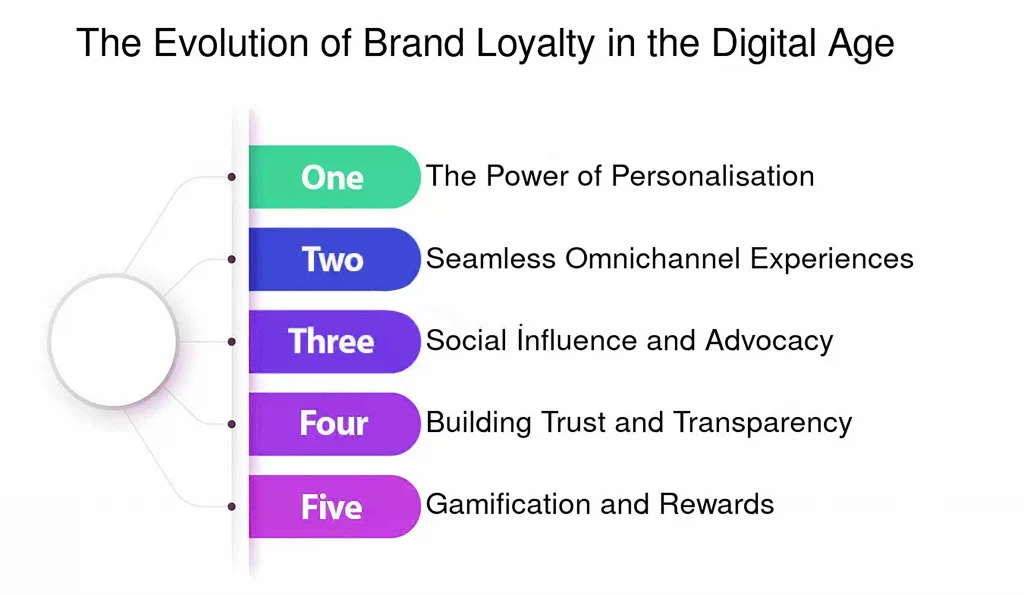
In a world where shopping is just a click away, businesses must build brand loyalty. Brand loyalty means that customers consistently return to purchase from you because they trust and appreciate your brand. Here are some simple strategies to build customer loyalty.
Importance of Customer Reviews and Social Proof
Customer reviews and social proof are powerful tools in building brand trust. Australian shoppers, like others worldwide, often rely on reviews to make purchasing decisions. Encouraging satisfied customers to leave positive reviews on your website, Google, or social media can significantly boost your credibility. Highlighting testimonials and displaying ratings on product pages also helps build trust, making it easier to convert visitors into buyers.
Strategies for Improving Customer Retention
Keeping existing customers is more cost-effective than attracting new ones. Businesses that focus on retaining their existing customers often see higher profits. Offering loyalty programs, exclusive discounts, and personalised communication can keep customers engaged. In Australia, where competition is increasing, fostering customer loyalty is crucial to long-term success.
The Role of Loyalty Programs and Rewards
Loyalty programs are a common way to motivate customers to make repeat purchases. Australian businesses that offer rewards points, discounts, or exclusive offers for loyal customers can strengthen their relationships and increase customer lifetime value. These programs not only improve retention but also make customers feel valued, which can lead to positive word-of-mouth marketing.
Sustainability and Ethical Practices in E-Commerce
Australian shoppers are becoming more aware of how their purchases impact the environment and society. Many are willing to spend extra on products that are eco-friendly or ethically made. To attract these eco-conscious customers, online businesses should highlight their commitment to sustainable practices in their marketing. This can include using eco-friendly packaging, sourcing products responsibly, reducing carbon emissions, offering digital receipts, and cutting down on waste. By adopting these practices, businesses can appeal to environmentally-minded shoppers and help the planet. Being open about sustainable efforts is crucial for building trust. Online businesses should share their initiatives on their websites, social media, and emails to connect with Australian consumers who care about responsible shopping.
Conclusion
The future of e-commerce in Australia is full of exciting opportunities and challenges. As consumer behaviour continues to evolve, businesses must adapt by adopting emerging technologies, personalising the shopping experience, and addressing the growing demand for sustainable practices. Digital marketing strategies—ranging from SEO to influencer marketing—will play a crucial role in driving e-commerce success.
Businesses that stay ahead by embracing mobile commerce, leveraging AI, and focusing on customer experience will be well-positioned to thrive in the competitive Australian market. By implementing the strategies discussed in this blog, e-commerce businesses can build strong relationships with customers, ensure long-term growth, and maintain a competitive edge.
Digital marketing is no longer an optional tool for businesses; it’s the cornerstone of growth in today’s digital-first world. For Australian businesses, where competition in the online space is intensifying, understanding how your marketing efforts are performing is crucial. But how do you know if you’re heading in the right direction?
This is where digital marketing metrics come into play. These metrics act as a mirror, reflecting the success of your marketing activities and giving you the information you need to fine-tune your strategies. Just like in a game of cricket, where you keep track of runs, wickets, and overs to assess the match, in marketing, you need to track key performance indicators (KPIs) to evaluate success.
In this blog, we’ll go beyond just listing metrics. We’ll explore why they matter, how they impact your business, and most importantly, how you can use them to drive sustainable growth in Australia’s competitive market. From website traffic to social media engagement, we’ll cover 11 critical digital marketing metrics every business should know.
What are Digital Marketing Metrics?
In simple terms, digital marketing metrics are numbers that tell a story about your marketing campaigns. They’re data points that help you understand whether your marketing strategies are working or not. Consider them a way to assess your business’s health. They tell you what’s working, what’s failing, and where you should be focusing your energy.
You might be thinking, “I already know how many followers I have on Instagram” or “I’m aware of my website traffic.” But those are just vanity metrics—impressive to look at but not very useful for understanding your business’s performance. What you need are actionable metrics—data points that you can use to make smart decisions and achieve real results.
Vanity Metrics vs Actionable Metrics
Vanity Metrics: These include things like likes, followers, and impressions. They make your marketing look good on the surface but don’t provide deep insights into customer behaviour.
Actionable Metrics: These metrics provide valuable insights that help you make strategic decisions. Metrics like conversion rate, bounce rate, and cost per acquisition (CPA) fall into this category.
For example, you may have thousands of visitors coming to your website, but if none of them are converting into leads or sales, then you’re missing out. This is where understanding the right metrics can help.
Benefits of Using Marketing Metrics
Digital marketing without metrics is like driving a car with your eyes closed. You need data to navigate your journey and to ensure you’re on the right path. Let’s break down some of the core benefits of using marketing metrics:
1. Informed Decision-Making
Data takes the guesswork out of marketing. Imagine you’re running two different Google Ads campaigns for your Australian tourism business—one targeting local travellers and the other targeting international tourists. You might have a hunch that the local campaign will perform better, but without tracking metrics like click-through rate (CTR) and conversions, you won’t know for sure. By looking at these metrics, you can see which campaign is more effective and allocate more budget to it.
2. Maximising ROI
At the end of the day, you want to know whether your marketing dollars are well spent. By tracking return on investment (ROI) and cost per acquisition (CPA), you can see which campaigns are bringing in the most revenue for the least cost. For instance, if your social media ads have a lower CPA than your email marketing efforts, you know where to focus more of your budget.
3. Optimising Campaign Performance
Marketing isn’t something you can just set up and leave alone. Metrics allow you to monitor campaign performance in real-time and make adjustments as needed. Let’s say you’re an e-commerce business based in Sydney. You launch a Facebook campaign to drive traffic to your site, but after a week, you notice your bounce rate is sky-high. This could indicate that your landing page isn’t aligned with your ad, so you can quickly tweak it to improve user experience.
4. Personalising Customer Experiences
Metrics such as engagement rate and average session duration provide insights into customer behaviour. By analysing these data points, you can tailor your marketing efforts to better meet the needs and interests of your audience. For example, if you notice that visitors spend more time on your “About Us” page, you might consider adding more engaging content, such as behind-the-scenes videos or customer testimonials.
5. Tracking Progress Toward Business Goals
Every business has goals—whether it’s increasing sales, building brand awareness, or driving traffic. Metrics help you track how close you are to achieving those goals. If your goal is to increase website traffic by 30% in the next quarter, you’ll use website traffic metrics to monitor progress. This keeps your marketing efforts aligned with your larger business objectives.
11 Digital Marketing Metrics Businesses Can Use
Now that we’ve covered why metrics matter, let’s dive into the key metrics that every Australian business should be tracking. Each of these metrics provides different insights, but together, they offer a holistic view of your digital marketing performance.
1. Brand Awareness Metrics
Making your brand known is the first step to building a connection with your audience. After all, people need to know who you are before they can engage with your products or services. But how can you measure something like awareness, which is hard to define?
Key Metrics to Track:
Impressions: This metric tells you how often your content is shown to users. For example, if you run an ad campaign on Google or Facebook, impressions show how many times your ad was shown to people.
Reach: Reach, on the other hand, counts how many unique individuals saw your content. If your Sydney-based ad campaign reaches 5,000 unique users, you know that 5,000 different people were exposed to your brand.
Branded Search Volume: This measures how often people search for your brand name on search engines like Google. Increasing branded search volume is a great indicator that your brand awareness efforts are paying off.
Real-World Example:
An Australian skincare brand runs an Instagram campaign targeting young adults. By tracking impressions and reach, they can see that their posts are getting high visibility. However, by digging deeper into their branded search volume, they notice that more people are also Googling their brand name after seeing the posts. This tells them that the campaign is successfully building awareness and driving interest.
2. Return on Investment (ROI)
Every business owner wants to know: is this investment worth it? That’s exactly what ROI tells you. It’s a simple yet powerful metric that helps you determine whether your marketing efforts are profitable.
RIO formula:
For example, let’s say a Brisbane-based fitness centre spends $5,000 on Facebook ads and generates $20,000 in revenue from new memberships. Their ROI would be:
ROI = ($20,000 – $5,000) / $5,000 x 100 = 300%
A 300% ROI means the campaign generated three times more revenue than what was spent.
Why ROI is Essential:
Budget Allocation: ROI helps you understand where to invest your money. If one campaign has a much higher ROI than another, you’ll want to allocate more budget to the more profitable one.
Long-Term Planning: ROI isn’t just about short-term wins. It also provides insights into the long-term profitability of your marketing efforts.
Example:
A Sydney-based digital marketing agency runs multiple ad campaigns for different clients. They track ROI for each campaign to determine which strategies are yielding the best results. If one client’s email marketing campaign has a significantly higher ROI than their social media campaign, they’ll recommend focusing more resources on email in the future.
3. Website Metrics
Your website is your digital storefront, and understanding how users interact with it is key to optimising performance. Website metrics provide insights into user behaviour, site performance, and overall engagement.
Key Website Metrics:
Traffic: This is the total number of people visiting your website. Whether they arrive via organic search, paid ads, or social media, traffic tells you how visible your website is.
Bounce Rate: Bounce rate is the percentage of visitors who leave your site without interacting with any other pages. A high bounce rate might mean that your site isn’t meeting what users are looking for.
Average Session Duration: This metric tells you how long users stay on your website. The longer they stay, the more engaged they are with your content.
Example:
A Melbourne-based e-commerce site notices a spike in traffic after running a Google Ads campaign. However, their bounce rate also increases, which suggests that the landing page isn’t effectively converting visitors into customers. By looking at this number, they choose to redesign the landing page to improve the user experience.
4. Search Engine Optimisation (SEO) Metrics
SEO is a long-term investment, but it can be one of the most effective ways to increase organic traffic to your website. However, simply ranking for a few keywords isn’t enough. You need to track multiple SEO metrics to understand your site’s overall health and performance.
How SEO Works
Search Engine Optimisation (SEO) is a process that improves your website’s visibility on search engines. Here’s how it works:
Content Creation: SEO begins with creating high-quality, relevant content that includes keywords your audience is searching for.
Crawling: Search engines use bots to discover and read your web pages by following links.
Indexing: After crawling, search engines store and organise your content in their database for quick retrieval.
Ranking: When users search, search engines analyse their index and rank pages based on relevance and authority, displaying the best matches in search results.
These steps help ensure your website is visible to users looking for relevant information or services.
Key SEO Metrics to Track:
Organic Traffic: This is the number of visitors who come to your website from search engines like Google, without clicking on paid ads. For businesses with limited advertising budgets, organic traffic can be a goldmine.
Keyword Rankings: This metric tells you where your website ranks for specific keywords in search results. If you’re a florist in Sydney, for example, you’ll want to track how well you rank for keywords like “Sydney flower delivery” or “wedding florist Sydney.” By focusing on industry-specific SEO, you can tailor your content and keywords to attract local customers actively searching for your services.
Click-Through Rate (CTR) from Search: This tells you how often people click on your website after seeing it in search results. If you’re ranking well for a keyword but your CTR is low, your meta descriptions or title tags might need optimisation.
Backlinks: Backlinks are links from other websites that lead to your content. Google sees backlinks as a signal of trustworthiness, so the more high-quality backlinks you have, the better your SEO.
Example:
A Brisbane-based café starts a blog to boost its organic SEO. Over time, they notice that their organic traffic is increasing, and they’re ranking higher for keywords like “best coffee in Brisbane.” By tracking their SEO metrics, they also see that blog posts on coffee brewing techniques and local events are getting backlinks from popular lifestyle websites, further boosting their rankings.
5. Cost Per Acquisition (CPA)
Cost per acquisition (CPA) is one of the most important metrics for measuring how much you’re spending to acquire a new customer. Whether it’s a sale, a sign-up, or a download, CPA tells you how efficient your marketing efforts are at turning leads into customers.
The formula for CPA:
For example, if a Sydney-based tech company spends $10,000 on Google Ads and generates 100 new customers, their CPA would be:
CPA = $10,000 / 100 = $100
A CPA of $100 means that it costs the company $100 to acquire one customer. Depending on the company’s product or service price point, this could be considered high or low. If the lifetime value (LTV) of a customer is $1,000, then a CPA of $100 would be a good investment.
Why CPA Matters:
Budget Efficiency: CPA helps you understand how cost-effective your marketing is. If you’re spending too much to acquire new customers, it might be time to refine your targeting or ad copy.
Profitability: A low CPA means you’re spending less to gain more. By lowering your CPA, you can make your marketing campaigns more profitable.
Example:
An Adelaide-based online retailer tracks CPA for their social media ad campaigns. After analysing the data, they noticed that Facebook ads have a lower CPA than Google Ads for acquiring new customers. By shifting more of their budget to Facebook ads, they reduce their overall CPA and improve profitability.
Tips to Reduce CPA:
Optimise Landing Pages: A high-converting landing page can lower your CPA by increasing the number of visitors who take the desired action.
Refine Targeting: By narrowing down your audience to those most likely to convert, you can improve your CPA. Tools like Facebook Ads Manager and Google Ads let you target specific groups of people based on their age, interests, and behaviours.
A/B Test Ads: Test different versions of your ads to see which ones perform best in terms of CPA. Sometimes, small tweaks to the headline or call to action (CTA) can have a big impact.
6. Click-Through Rate (CTR)
Click-through rate (CTR) is one of the easiest and most direct metrics to track in digital marketing. It measures how often people click on your ad, link, or website when they see it in a search result, an email, or on social media. A higher CTR typically means your content is relevant and engaging for the audience it’s targeting.
The formula for CTR:
For example, if an Australian e-commerce business runs a Google Ad that receives 10,000 impressions and 500 clicks, their CTR is:
CTR = (500 / 10,000) x 100 = 5%
A high CTR indicates that your ad copy or search result is resonating with users. On the other hand, a low CTR could mean that your message isn’t compelling enough or that your targeting is off.
Why CTR Matters:
Ad Relevance: A high CTR indicates that your ads or content are relevant to your target audience. If you’re getting a lot of impressions but a few clicks, it might be time to reevaluate your keywords, messaging, or audience targeting.
Improving Quality Score: For Google Ads, CTR plays a role in determining your Quality Score, which affects how much you pay per click. A higher Quality Score can lower your cost per click (CPC) and improve ad placement.
Example:
A Melbourne-based tourism company runs a Google Ads campaign targeting “Great Ocean Road tours.” They notice that their CTR is lower than expected, even though they’re getting a lot of impressions. After reviewing their ad copy, they realise that their CTA isn’t clear enough. They update the copy to include a stronger action phrase like “Book Your Adventure Today!” and immediately see an improvement in their CTR.
Tips to Improve CTR:
Use Action-Oriented CTAs: Words like “Buy Now,” “Learn More,” or “Sign Up Today” can help nudge users toward clicking.
Target the Right Audience: Ensure that your ads or content are reaching the people most likely to be interested in your product or service.
Optimise Meta Titles and Descriptions: For SEO, having compelling meta titles and descriptions can improve CTR for your website’s search results.
7. Bounce Rate
Bounce rate measures the percentage of visitors who leave your website after viewing only one page, without interacting further. A high bounce rate can indicate a poor user experience or that your website isn’t aligned with the expectations of your visitors.
Why Bounce Rate is Important:
User Engagement: A high bounce rate often signals that users aren’t finding what they’re looking for, which can negatively affect your SEO and conversions.
Improving User Experience: Reducing your bounce rate means keeping visitors on your site longer, which gives you a better chance of converting them into customers.
The formula for Bounce Rate:
For example, if your Brisbane-based yoga studio’s website has 1,000 sessions, and 600 of those sessions result in users leaving after only viewing one page, your bounce rate is:
Bounce Rate = (600 / 1,000) x 100 = 60%
A bounce rate of 60% might indicate that visitors are either not interested in your content or that your website isn’t user-friendly.
Example:
A Gold Coast-based real estate agency notices that their bounce rate is particularly high for their property listings. After investigating, they found that their website isn’t optimised for mobile devices, leading to a poor user experience. By redesigning the website to be mobile-friendly, they reduce their bounce rate and increase user engagement.
Tips to Reduce Bounce Rate:
Improve Page Load Times: Users tend to leave websites that take too long to load. Tools like Google PageSpeed Insights can help you identify areas to optimise.
Create Engaging Content: If your content isn’t capturing users’ attention, they’re more likely to leave. Use engaging visuals, videos, and clear headings to keep visitors interested.
Match Landing Page with User Intent: Ensure that your landing page is aligned with the promises made in your ads or search results. If someone clicks on an ad for “Sydney web design services” and lands on a page about graphic design, they’re more likely to bounce.
8. Engagement Rate
Engagement rate measures how much users interact with your content across different platforms, such as social media, blogs, or email newsletters. It’s an important metric because it reflects how invested your audience is in what you’re sharing.
Key Engagement Metrics:
Likes, Comments, and Shares: These indicate how much users are responding to and sharing your content.
Clicks and Views: These metrics show whether people are taking the next step by clicking through to your website or watching your video content.
Replies and Mentions: For social media, replies and mentions give you insight into how often users are talking about your brand.
The formula for Engagement Rate:
For example, if a Canberra-based fitness influencer has 10,000 Instagram followers and receives 1,500 total engagements (likes, comments, and shares) on a post, their engagement rate would be:
Engagement Rate = (1,500 / 10,000) x 100 = 15%
Example:
A local fashion boutique in Sydney notices that their Instagram posts about new arrivals have a high engagement rate, but posts about styling tips don’t perform as well. By focusing more on the types of posts that resonate with their audience, they increase their overall engagement.
9. Conversions
In digital marketing, conversions refer to the specific actions you want your visitors to take, whether it’s making a purchase, signing up for a newsletter, or downloading a resource. Tracking conversions is essential for evaluating the effectiveness of your marketing strategies and determining ROI.
Why Tracking Conversions Matters:
Performance Measurement: Understanding conversion rates allows you to see which campaigns are performing well and which ones need adjustments.
Customer Insights: By analysing conversion data, you can learn more about your audience’s behaviour and preferences, which can inform future marketing strategies.
The formula for Conversion Rate:
For instance, if a Newcastle-based travel agency receives 5,000 visitors to their website in a month and has 500 conversions (e.g., bookings, sign-ups), their conversion rate would be:
Conversion Rate = (500 / 5,000) x 100 = 10%
A conversion rate of 10% can be quite favourable, depending on the industry. However, businesses should strive to continuously optimise this metric.
Example:
A Melbourne-based online course provider tracks conversions for their webinar sign-ups. They discover that their conversion rate improves significantly when they offer a limited-time discount. By utilising urgency in their marketing, they encourage more visitors to take action.
Tips to Improve Conversion Rates:
Optimise Your Call to Action (CTA): Make sure your CTAs are clear, compelling, and easily visible. Experiment with different phrases, colours, and placements to find what works best.
A/B Testing: Try out different versions of your landing pages or emails to find out which ones get more people to convert. Changes could include different headlines, images, or even the layout of the page.
Reduce Friction: Make the process of converting as easy as possible. If you’re asking visitors to fill out a form, minimise the number of fields to the essentials. A lengthy process can deter potential customers.
10. Quality of Inbound Links
Inbound links, also known as backlinks, are links from other websites to your content. The quality of these links significantly impacts your site’s authority and search engine ranking. High-quality backlinks from reputable sites can drive traffic and improve SEO.
Why Quality of Inbound Links Matters:
SEO Benefits: Search engines like Google consider the number and quality of backlinks when determining search rankings. The more authoritative the site links to you, the better.
Traffic Generation: Quality backlinks can lead to referral traffic, bringing new visitors to your site who might convert into customers.
Factors Determining Link Quality:
Relevance: Links from sites that are relevant to your industry or niche carry more weight.
Domain Authority: Links from high-authority domains (like established news sites or industry leaders) are more beneficial than links from low-authority sites.
Example:
A Brisbane-based health and wellness blog receives a mention in a popular online magazine that focuses on fitness trends. This mention results in a significant boost in website traffic, along with a new influx of quality backlinks. Their organic rankings improve as a result.
Tips to Improve Link Quality:
Create High-Quality Content: The more valuable and informative your content is, the more likely others will link to it. Think about creating guides, infographics, or industry reports.
Guest Blogging: Writing articles for other reputable blogs can help you earn backlinks and increase your visibility. Just make sure to choose relevant sites in your industry.
Engage in Outreach: Connect with other businesses or bloggers in your niche and propose collaborations or link exchanges that can benefit both parties.
11. Social Media Engagement
Social media engagement measures how users interact with your content on platforms like Facebook, Instagram, Twitter, and LinkedIn. High engagement levels often indicate that your content resonates with your audience and encourages sharing.
Why Social Media Engagement Matters:
Brand Awareness: Engaging posts can increase visibility and reach, making more people aware of your brand.
Community Building: High engagement helps foster a sense of community and loyalty among your audience, which can translate to higher customer retention rates.
Key Social Media Engagement Metrics:
Likes, Comments, and Shares: These basic metrics show how well your content is received.
Follower Growth Rate: Tracking how quickly you gain new followers can provide insight into the effectiveness of your social media strategy.
Post Reach: Knowing how many people see your posts can help you gauge your content’s visibility.
Example:
A Gold Coast fashion brand uses Instagram to promote its latest collection. They encourage customers to share photos wearing their clothes using a unique hashtag. This strategy not only boosts their engagement rate but also helps them build a community of loyal customers who promote their brand organically.
Tips to Increase Social Media Engagement:
Ask Questions: Encourage engagement by asking your audience questions about your industry. This could be simple polls, open-ended questions, or even engaging quizzes.
Use Visuals: Posts with images, videos, or graphics typically perform better than text-only posts. Investing in high-quality visuals can help attract more engagement.
Respond to Comments: Take the time to engage with your audience by responding to comments and messages. This fosters a sense of community and makes your audience feel valued.
Conclusion
In today’s digital landscape, measuring success through key digital marketing metrics is essential for Australian businesses. Understanding and tracking metrics like brand awareness, ROI, website performance, SEO metrics, CPA, CTR, bounce rate, engagement rate, conversions, quality of inbound links, and social media engagement can provide valuable insights into your marketing strategies.
By consistently analysing these metrics, businesses can make informed decisions that lead to improved performance, increased ROI, and better customer experiences. Remember, digital marketing is not just about acquiring customers; it’s about understanding them and delivering value at every touchpoint.
As you continue your digital marketing journey, keep in mind that the landscape is always evolving. Stay adaptable, be willing to test new strategies, and regularly review your metrics to ensure you’re on the right track. With the right approach, you can harness the power of digital marketing to drive growth and achieve your business goals.
Influencer marketing continues to evolve rapidly, and 2024 is no exception. With the rise of new platforms, changing regulations, and growing consumer demand for authentic content, the landscape for influencer marketing is more dynamic than ever. Brands are increasingly investing in influencers to build trust, engage target audiences, and drive sales. Whether you’re a brand or an influencer, understanding the current trends, strategies, and challenges in 2024 is crucial for success.
This guide will provide a comprehensive overview of influencer marketing in 2024, covering everything from platform analysis to influencer types and categories, key strategies, and case studies of successful campaigns.
What is Influencer Marketing?
Influencer marketing is a type of marketing that focuses on using key leaders—often known as “influencers”—to drive your brand’s message to the larger market. Rather than targeting a broad audience directly, brands hire influencers to deliver the message through their established credibility, trust, and following on social media marketing platforms like Instagram, YouTube, and TikTok.
Influencers range from celebrities and industry experts to niche bloggers and content creators, whose word carries weight among their followers. Brands collaborate with these influencers to promote products and services authentically, often resulting in higher engagement and conversion rates than traditional ads.
Platform Analysis
In today’s influencer marketing ecosystem, choosing the right platform is crucial for reaching your target audience. The most successful influencer campaigns tend to focus on a combination of the following platforms:
1. Instagram as a Leading Platform
Instagram has long been at the forefront of influencer marketing. With over 1.3 billion users globally, Instagram remains the go-to platform for influencers to share branded content, thanks to its focus on visuals, stories, and short-form videos. In Australia, Instagram is a major hub for influencer marketing, had 13.95 million users in Australia in early 2024, with categories ranging from fashion and lifestyle to fitness and travel.
Instagram Features for Influencer Marketing: Instagram offers unique features like Stories, Reels, and IGTV, which allow influencers to create engaging and authentic content. Brands can leverage Instagram’s paid partnership tools for transparency, and analytics tools like Instagram Insights to measure performance.
Influencer Categories on Instagram: Micro-influencers (10,000–50,000 followers) are particularly effective on Instagram because their content often feels more personal and authentic. Mega-influencers (over 1 million followers) also find Instagram advantageous due to the platform’s wide-reaching audience.
2. Emergence of TikTok
TikTok has quickly become one of the hottest platforms for influencer marketing, thanks to its ability to drive viral content. With over 25.21 million internet users in Australia at the start of 2024, TikTok offers brands and influencers a platform to reach young, highly engaged audiences. According to data from ByteDance’s advertising resources, TikTok had 9.73 million users aged 18 and over in Australia as of early 2024. Short-form video content is TikTok’s hallmark, providing influencers with creative ways to promote products, especially with trending challenges and hashtags.
TikTok Features for Influencer Marketing: TikTok’s algorithm prioritises engagement, so even nano-influencers can achieve viral success if their content resonates with users. Brands can also utilise TikTok’s paid ads and analytics tools to target specific demographics.
3. Facebook as an Influencer Marketing Platform
Although Instagram and TikTok often dominate discussions around influencer marketing, Facebook still holds a significant position. With a vast user base of over 2.9 billion globally, and more than 16 million active users in Australia, Facebook provides a versatile platform for influencer marketing.
Unique Features of Facebook for Influencer Marketing
Advanced Targeting Capabilities: Facebook’s audience targeting options allow brands to reach specific audiences based on interests, behaviours, and demographics. This makes Facebook especially appealing for advertisers aiming for high conversion rates.
Facebook Groups: Influencers leverage groups to create niche communities where they interact with their followers more personally. These groups are effective for long-term product endorsements and deeper conversations.
Facebook Stories & Live: Facebook’s ephemeral content options—such as Stories and Facebook Live—are becoming crucial for influencer collaborations. Influencers can use these features like meta business manager to promote limited-time offers or engage with audiences in real-time.
Regulatory Environment
As influencer marketing grows, so does the need for clear guidelines and regulations to ensure transparency between brands, influencers, and consumers. The Australian government and industry bodies have introduced several regulations and guidelines.
1. Advertising Standards
In Australia, influencer marketing is governed by the Australian Association of National Advertisers (AANA) and its code of ethics. This includes ensuring transparency when influencers are paid or receive products in exchange for promotion. Influencers must use hashtags like #ad or #sponsored to indicate that content is paid for.
2. Consumer Laws
Australia’s consumer laws, under the Australian Competition and Consumer Commission (ACCC), also play a role in regulating influencer marketing. Influencers must provide honest and truthful representations of products, or they may face penalties under Australian Consumer Law for misleading or deceptive conduct.
Influencer Marketing Strategy
To create a successful influencer marketing campaign in 2024, brands need a well-structured approach. This strategy includes:
Define Goals: Whether it’s increasing brand awareness, generating leads, or boosting sales, the campaign should have clear and measurable goals.
Identify the Right Influencers: Depending on the campaign goals, brands should look for influencers that align with their target audience and brand values.
Content Creation and Collaboration: Work closely with influencers to craft authentic and creative content. Sponsored content should feel organic to the influencer’s usual style, ensuring higher engagement rates.
Leverage Multiple Platforms: In 2024, multi-platform strategies are becoming increasingly important. Brands can leverage Instagram, TikTok, Facebook, and even emerging platforms like Threads to optimise reach.
Ad Spending & Trends
Average Ad Spending Per Internet User
The growing influence of social media is reflected in ad spending. The average ad spending per internet user has grown from $3 in 2017 to $20.26 in 2024 (as seen in the graph). This increase highlights how brands are investing more in digital advertising, including influencer marketing.
Total Ad Spending
The total ad spending on digital platforms is expected to reach $589.10 millionin 2024, and it’s projected to increase to $874.50 million by 2029 (based on the provided chart). This reflects the ongoing shift towards influencer-driven advertising as brands move away from traditional media.
Influencer Types & Categories
Understanding the different types of influencers is important for developing a tailored influencer marketing strategy. Influencers are generally divided into four categories based on their follower count:
1. Mega-Influencers (1 million+ followers)
Mega-influencers are often celebrities or public figures with massive followings. While they can drive extensive reach, they often come with higher costs and may not deliver the most engagement relative to their audience size. Mega-influencers are ideal for large brands with substantial budgets looking to increase brand awareness.
2. Macro-Influencers (100,000–1 million followers)
Macro-influencers typically have established personal brands and a large, diverse audience. They are a good option for brands that want to target a broader audience but at a lower cost than mega-influencers.
3. Micro-Influencers (10,000–100,000 followers)
Micro-influencers often have niche audiences with high engagement rates. They are considered more authentic and trusted by their followers, making them ideal for smaller brands or highly targeted campaigns.
4. Nano-Influencers (1,000–10,000 followers)
Nano-influencers may have the smallest following, but they also have incredibly loyal audiences. They are especially effective for local SEO campaigns or niche markets, offering intimate and personalised content.
Case Studies of Successful Influencer Marketing Campaigns
Koala (Instagram): Koala, an Australian mattress brand, used humour and influencer collaborations to showcase their easy-to-deliver mattresses. Local influencers shared unboxing experiences through Instagram Stories and posts, boosting brand awareness.
Bondi Sands (Instagram and YouTube): Bondi Sands partnered with beauty influencers like Shani Grimmond to demonstrate their tanning products. Tutorials and reviews on Instagram and YouTube helped the brand expand both locally and internationally.
Athlete’s Foot (Facebook): Athlete’s Foot Australia teamed up with fitness influencers to promote their shoe range on Facebook. The campaign increased online traffic and in-store visits by targeting health-conscious consumers.
MECCA (TikTok): MECCA leveraged TikTok influencers to promote skincare and makeup tutorials. The viral beauty content helped them reach a younger audience, boosting both online and in-store sales.
These Australian companies successfully used influencer marketing to increase brand visibility and customer engagement across various platforms.
Measuring ROI in Influencer Marketing
Measuring the return on investment (ROI) for influencer marketing campaigns is crucial to understanding their effectiveness. This can be done by tracking various metrics:
1. Engagement Metrics
Engagement metrics such as likes, comments, and shares provide a clear indication of how well the influencer’s audience is interacting with the content. High engagement rates often correlate with increased brand visibility and audience trust.
2. Conversions
Whether you’re selling products or generating leads, tracking conversions is one of the most direct ways to measure ROI. Influencers can use trackable links or promo codes to attribute sales directly to their content.
3. Brand Awareness
For campaigns focused on brand awareness, metrics like reach and impressions are essential. These measure how many people saw the content and the overall exposure of the campaign.
4. Sentiment Analysis
Beyond raw numbers, it’s also important to understand how people are responding to influencer content. Sentiment analysis tools can help track whether the conversation surrounding your campaign is positive or negative.
Challenges and Considerations
While influencer marketing offers numerous benefits, there are several challenges that brands should consider.
1. Finding the Right Influencers
One of the biggest challenges is finding influencers who align with your brand values and can effectively engage your target audience. Brands often rely on influencer marketing platforms or agencies to streamline this process.
2. Authenticity Concerns
As influencer marketing becomes more mainstream, consumers are becoming wary of overly promotional content. Ensuring that influencers genuinely align with your brand and product is crucial to maintaining authenticity.
3. Changing Algorithms
Social media platforms frequently update their algorithms, which can affect how influencer content is delivered and seen by followers. Brands need to stay updated on these changes to adapt their strategies accordingly.
Tips for Beginner Influencers
Starting as an influencer is exciting, but success takes more than posting. Focus on building a loyal audience, creating quality content, and engaging authentically. Here are some essential tips to support your growth:
Find Your Niche: Focus on a specific area that you are passionate about, like fashion, fitness, or travel.
Consistency is Key: Post regularly to keep your audience engaged and show up in feeds more often.
Engage with Followers: Respond to comments and messages to build a loyal and interactive community.
Be Authentic: Stay true to your personality and values. Authenticity helps build trust with your audience.
Collaborate: Work with other influencers to expand your reach and grow your follower base.
Leverage Hashtags: Use relevant hashtags to increase visibility and attract new followers.
Invest in Quality Content: Good visuals and well-thought-out captions are essential to stand out.
Track Your Progress: Use analytics to understand what works best for your audience and improve future content.
Conclusion
In 2024, influencer marketing remains an essential part of a brand’s SEO strategy. With the continued growth of platforms like Instagram, TikTok, and Facebook, brands have more opportunities than ever to connect with their audiences. By crafting targeted influencer campaigns, leveraging multiple platforms, and staying up to date with regulations, brands can achieve measurable success in this ever-evolving industry.
Artificial Intelligence (AI) is not just a buzzword; it’s reshaping the way businesses approach digital marketing across Australia. From enhancing customer experiences to optimising content strategies, AI is enabling marketers to work smarter, not harder. In this blog, we’ll delve into the various facets of AI in digital marketing, providing insights and examples relevant to the Australian market.
The Rise of AI in Digital Marketing
As the digital landscape becomes increasingly competitive, Australian businesses are adopting AI technologies to stay ahead. A significant majority of CEOs—72% in Australia and 76% globally—do not think that generative AI will affect staffing levels in their companies. This shift allows companies to leverage vast amounts of data to make informed decisions and deliver tailored marketing strategies.
AI-Powered Personalisation in Australian Marketing
Personalisation has become a crucial element in successful marketing campaigns. With AI, businesses can analyse customer data—such as browsing behaviour, past purchases, and demographic information—to create highly personalised experiences. For instance, retailers like The Iconic use AI algorithms to recommend products based on individual user behaviour, enhancing user engagement and boosting sales.
In a study by Epsilon, 80% of consumers reported being more likely to make a purchase when brands offer personalised experiences. In Australia, companies leveraging AI-driven personalisation are seeing significant increases in conversion rates and customer satisfaction.
AI-Driven Content Creation and Optimisation
Content is at the heart of digital marketing, and AI is revolutionising how it’s created and optimised. Tools like Jasper and Writesonic help marketers generate high-quality content tailored to their target audiences. These platforms use natural language processing (NLP) to analyse successful content and suggest topics that will resonate with readers.
For example, News Corp Australia uses AI to optimise its articles, analysing reader engagement data to refine its content strategy. By implementing AI-driven content creation, brands can not only produce more relevant content but also improve their search engine optimisation (SEO) efforts.
The Role of AI in Customer Experience Enhancement
Customer experience (CX) is critical in today’s competitive market, and AI is enhancing this aspect significantly. AI-powered chatbots, like those used by Telstra, provide 24/7 customer service, handling inquiries and issues in real time. This not only improves customer satisfaction but also reduces resolving operational costs.
According to research by Gartner, by 2025, 75% of customer service interactions will be powered by AI. This shift allows businesses to deliver timely support and gather insights into customer preferences, ultimately enhancing the overall experience.
Predictive Analytics and AI in Marketing Strategies
Predictive analytics is a key application of AI in marketing. By examining past data, AI can anticipate future customer behaviours and trends. For instance, Australian businesses can use tools like Google Analytics with integrated AI capabilities to identify patterns and predict customer actions.
Companies like Qantas leverage predictive analytics to optimise their marketing campaigns, tailoring offers based on customer behaviour. This proactive approach enables businesses to allocate resources more effectively and target campaigns that resonate with potential customers.
AI Marketing Agency Key Takeaways
Partnering with an AI marketing agency can provide businesses with the expertise necessary to navigate this complex landscape. Agencies like The Online Group specialise in AI-driven marketing strategies, helping brands implement tools that enhance customer engagement and drive conversions.
These agencies offer tailored solutions, from content creation to predictive analytics, ensuring that businesses can harness the full potential of AI in their marketing efforts.
Revolutionising Digital Marketing with AI
AI is fundamentally changing digital marketing by enabling businesses to streamline operations and enhance targeting capabilities. For example, companies can use AI tools to segment their audiences more effectively, ensuring that marketing messages reach the right people at the right time.
A study by McKinsey found that businesses that leverage AI for marketing see a 10% to 20% increase in sales. By adopting AI technologies, Australian companies can not only improve efficiency but also gain a competitive advantage in the market.
Why Choose an AI Marketing Agency?
Choosing an AI marketing agency means gaining access to specialised knowledge and advanced tools. These agencies understand the intricacies of AI-driven marketing and can provide insights that may not be readily available in-house. For instance, AI marketing consultants can help businesses implement AI strategies that are aligned with their overall marketing goals, ensuring that every campaign is data-driven and effective.
AI-Enhanced Content Marketing
AI enhances content marketing by enabling businesses to create more targeted and relevant content. Tools like Canva’s AI features allow marketers to design graphics and layouts tailored to specific audiences, making the content visually appealing and engaging.
Moreover, AI can analyse which types of content perform best in various demographics, helping businesses refine their strategies. For example, Australian companies can utilise platforms like BuzzSumo to gauge content performance and adjust their strategies accordingly.
AI Marketing Agency Real-Time AI Advertising
Real-time AI advertising allows marketers to adjust campaigns based on live data. Platforms like AdRoll use AI to analyse user interactions and adapt ad placements in real-time, ensuring that advertisements are relevant and timely.
For example, Australian brands can target users based on their browsing history and preferences, leading to higher conversion rates. This approach ensures that marketing efforts are not only efficient but also effective in reaching potential customers.
AI Marketing Agency AI-Driven Social Media Strategies
AI is transforming social media marketing by automating various tasks, such as content scheduling and performance analysis. Tools like Hootsuite and Sprout Social incorporate AI to provide insights into user engagement, allowing brands to craft posts that resonate with their audiences.
In Australia, businesses can use AI-driven insights to optimise their social media strategies, ensuring that they remain relevant in a fast-paced digital environment. By understanding which content performs best on specific platforms, companies can enhance their engagement rates significantly.
AI Marketing Agency Advanced AI Analytics
Advanced AI analytics tools offer deep insights into marketing performance, helping businesses identify what works and what doesn’t. By using AI to analyse campaign data, companies can refine their strategies and make informed decisions.
For instance, platforms like Tableau and Looker enable businesses to visualise data in real-time, making it easier to track key performance indicators (KPIs) and adjust strategies as needed. This data-driven approach ensures that marketing efforts are continuously optimised for maximum impact.
Personalised Customer Experiences with AI Marketing Automation
AI marketing automation allows businesses to create highly personalised customer journeys. By analysing user data, marketers can segment audiences and send tailored messages at optimal times, enhancing engagement.
For example, Australian brands like Catch.com.au utilise AI-driven marketing automation to send personalised offers based on customer behaviours. This level of customisation not only improves customer experiences but also boosts conversion rates.
AI in E-commerce Marketing
In the realm of e-commerce, AI is transforming how businesses market their products. AI tools can provide personalised product recommendations, optimise pricing strategies, and improve inventory management.
For instance, Kogan.com uses AI algorithms to analyse user behaviour and suggest products that are likely to convert. This personalisation creates a more engaging shopping experience, leading to increased sales and customer loyalty.
Lead Generation Automation
AI streamlines lead generation by automating the process of identifying and qualifying potential leads. Tools like HubSpot utilise AI to analyse user interactions, enabling marketers to focus on leads that are most likely to convert.
This approach not only enhances efficiency but also increases conversion rates. Australian businesses that leverage AI for lead generation can significantly improve their sales processes and drive revenue growth.
Conversion Rate Optimisation (CRO)
AI tools play a crucial role in Conversion Rate Optimisation (CRO) by analysing user behaviour and identifying areas for improvement in website design. By using AI to track interactions, businesses can determine which elements hinder conversions and suggest actionable changes.
For example, Crazy Egg offers AI-driven insights that help businesses optimise their landing pages for better performance. As seen in the chart, the number of AI tool users is projected to grow steadily, indicating a rising reliance on AI for optimising websites and increasing CRO effectiveness.
This AI-powered approach leads to higher conversion rates, helping businesses improve user engagement and ultimately drive more sales.
Integrating AI in Email Marketing
AI enhances email marketing by personalising content, optimising send times, and segmenting audiences based on behaviour. Platforms like Mailchimp utilise AI to analyse engagement data, allowing marketers to craft targeted campaigns that resonate with recipients.
By utilising AI-driven insights, Australian businesses can improve their email marketing strategies, leading to higher open rates and increased customer engagement.
Creative AI Solutions: Web and Graphic Design
AI is also making waves in creative fields such as web and graphic design. Tools like Adobe Sensei and Canva’s AI features assist marketers in creating visually appealing designs quickly and efficiently.
These AI-driven tools help streamline the design process, allowing marketers to focus on strategy while ensuring that their branding is consistent and engaging. This creativity, combined with data insights, leads to more effective marketing materials.
Cost-Effective AI Solutions
Implementing AI solutions can be cost-effective in the long run. By automating repetitive tasks and improving overall efficiency, businesses can reduce operational costs while maximising their marketing impact.
According to a report by McKinsey, companies that implement AI technologies can achieve up to a 40% increase in productivity. This efficiency translates to a higher return on investment, making AI a compelling option for marketers.
The Future of AI in Marketing
The future of AI in marketing is bright, with continuous advancements expected to further reshape the industry. As technology evolves, businesses can anticipate more sophisticated AI applications that enhance marketing strategies and improve customer experiences.
In Australia, staying ahead of these trends will be crucial for businesses looking to thrive in a competitive market. Embracing AI innovations will not only enhance operational efficiency but also position brands as leaders in their respective industries.
Conclusion
AI is fundamentally transforming digital marketing in Australia, offering innovative solutions that enhance efficiency, personalisation, and customer engagement. By leveraging AI technologies, businesses can create targeted SEO strategies, optimise campaigns, and ultimately achieve greater success.